
/// Who We Are ///
Built By People Who Have Seen The Threat Firsthand
ABI is led by people who spent their careers tracking how adversary states go after America's critical technologies, and who now see the same patterns in the medicines Americans depend on. Executive Director Jennifer Crook led CIA work on threats to U.S. technology, supply chains, and data. Senior Advisor Gary Locke served as Governor of Washington, U.S. Secretary of Commerce, and Ambassador to China, and Senior Advisor Patrick McHenry chaired the House Financial Services Committee.
/// Leadership ///
Executive Director

Jennifer A. Crook
Executive Director, American Biosecurity Initiative
Jennifer Crook is a retired CIA clandestine operations officer with more than 25 years across the U.S. Intelligence Community, foreign governments, congressional oversight, and the defense and homeland security sectors. For the last decade of her career she led the Agency's China-focused work on threats to U.S. emerging technology, intellectual property, supply chains, and data. As Chief of Targeting and Data Exploitation, she built the Agency's first combined risk identification and data science program, working alongside the FBI, NSA, the Departments of Homeland Security and Defense, and foreign intelligence partners to protect U.S. critical infrastructure.
She leads ABI because U.S. national security depends on the availability, safety, and continued innovation of American medicine, and the national security community has yet to organize around that problem.
/// Senior Advisors ///
They Have Made These Decisions Before
ABI's senior advisors have run the agencies and written the laws that determine whether America discovers its own medicines and where it makes them. They joined because they reached ABI's conclusion on their own. America wins the biotech race by building its own strength, not by cutting itself off from the world.
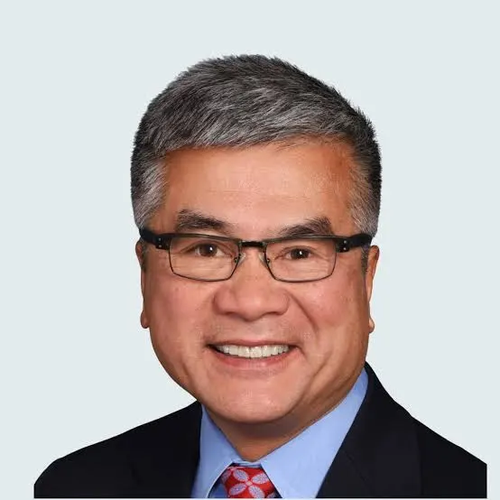
Gary Locke
Former Governor of Washington, U.S. Secretary of Commerce, and U.S. Ambassador to China
Gary Locke governed Washington State from 1997 to 2005, led the Commerce Department from 2009 to 2011, and represented the United States in Beijing from 2011 to 2014. At Commerce he ran export controls and trade enforcement, the policies that decide which American technology travels and where it lands. In Beijing he watched a national biotechnology strategy take shape from inside the country pursuing it. That gives him standing on the question ABI exists to answer, which is how America competes without walling itself off.
“I saw firsthand how seriously China takes biotechnology and medicine. The United States needs to be just as serious. We should be strengthening what America does best — discovering new medicines, bringing them to patients, and making more of them here at home.”
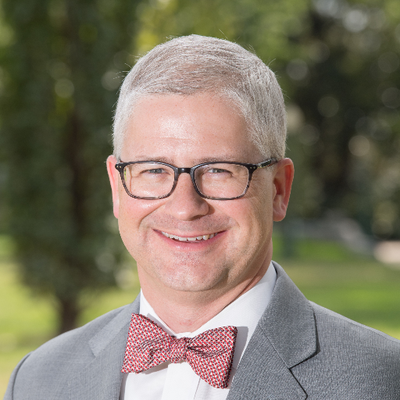
Patrick McHenry
Former Chairman, House Financial Services Committee
Patrick McHenry represented North Carolina's 10th District for twenty years and chaired the House Financial Services Committee, where capital formation was his subject. American medicine moves along a chain that runs from federal research through private investment to a patient, and the investment link is the one policy breaks most easily. He knows how that chain is built and what severs it.
“America leads the world in discovering medicines because our system lets capital and science find each other. That advantage took decades to build, and protecting it requires a strategy that lasts longer than any one Congress or administration.”
America's Biotech Race With China Must Be Won at Home
ABI is assembling leaders from government, finance, health care, intelligence, trade, manufacturing, and national security. What binds them is a shared reading of the pressure on American medicine and a commitment to an answer that builds American capacity rather than retreating from the world.
Anyone interested in joining as an advisor can use the form below.
/// What We Stand For ///
We Compete By Building Strength
Five principles guide every position the American Biosecurity Initiative takes, and two objectives focus the work. Both start from the same judgment. The threat is real, broad restriction is the wrong answer to it, and the work that matters is rebuilding American strength.
-
01
Clearly Communicate Threats, Foreign and Domestic
Predatory statecraft abroad and policy erosion at home both weaken American biosecurity. Sanitizing either produces bad policy or surrenders the strongest argument available.
-
02
Do No Harm to Domestic Capacity. Unleash the Private Market.
No policy should weaken America's ability to research, develop, or make its own medicines. The private market carries discovery to patients. Protect the capital, research base, and talent that discovery runs on.
-
03
Solidify Leadership Through Trusted Networks
Domestic capability is the foundation. Trusted partners, shared standards, and redundancy across allied networks make it durable. American presence carries American standards.
-
04
Protect the U.S. Workforce and Retain the Best and Brightest
The scientific workforce is one of the country's most durable advantages. Screening people by ethnicity or national origin treats that advantage as a threat and hands adversaries a recruiting argument.
-
05
Value and Invest in Medicine as a National Security Asset
America funds its defense assets through public investment paired with private capital. Medicine has not been treated as one of them. Price controls drain the development side of that partnership and leave the country exposed to adversaries who control the supply Americans depend on.
The Two Objectives
Lead the global field
Unleash domestic capacity
/// The Policy Framework ///
These Principles, Put to Work
Securing America’s Biotechnology Leadership sets out how Washington can act on them: three pillars and 23 recommendations for Congress and the executive branch, each tied to a national security objective.
- Strengthen America’s research ecosystem
- Modernize regulations to move at the speed of science
- Forge resilient supply chains with trusted partners
/// Partners ///
Who We Work With
ABI partners with think tanks, research organizations, and academic institutions that study the threat and shape the policy response. Their analysis grounds our work and their independence strengthens it.
Research Institutions and Think Tanks
Independent analysis of supply chains, biosecurity, and strategic competition.
Universities and Academic Centers
The scientific and policy research base that keeps ABI's case anchored in evidence.
Professional and Industry Associations
Organizations that represent the workforce and the sectors at the center of American biosecurity.
We are expanding this network. Organizations that share the analysis are invited to join it.
/// Join the Effort ///
Add Your Name
Interested in advising ABI, or in partnering as an organization? Tell us who you are and we will be in touch.